

• Skip to primary navigation
  • Skip to main content
  • Skip to primary sidebar
  • Skip to footer
  • ¡Se Habla Español!
  • About
  • Privacy Policies
  • Contact
  • 847.741.7370
  • Facebook
  • Instagram
  • Twitter
Well Child Center 50 Year

Well Child Center

Growing Health Families

Support Well Child Center!

DONATE TODAY

  • Schedule Appointment
  • Dental Services
  • WIC Nutrition Services
  • Food for Families
  • Partnerships / Resources
  • Blog
  • Support

Blog

The Importance of the 2020 Census

March 17, 2020

In mid-March, everyone will receive an invitation to complete the 2020 Census. You can respond in one of three ways: online, by phone, or by mail. Why should you participate? The 2020 Census counts every person living in the 50 states, District of Columbia, and five U.S. territories providing critical data that will directly affect you and your community.

The results of the data determine the numbers of seats each state will have in the U.S. House of Representatives. It’s also in the Constitution: Article 1, Section 2, mandating that the country conduct a count of its population once every 10 years. Furthermore, billions of dollars in federal funding are distributed depending on Census results and given to resources that are needed most. This includes support for hospitals, childcare, food assistance, schools, first responders, early childhood development programs, etc.

Young children are the most likely group to be undercounted. In 2010, some 1 million children under 5 years old were not accounted for in the national survey. The importance of a fair and accurate Census count is not to be taken lightly. When persons are accounted for correctly, it ensures that the amount of money distributed among our communities is legitimate. Furthermore, local and state governments, businesses, nonprofits and foundations rely heavily on data from the census to allocate funding, define services, and promote economic development.

Historically, underserved populations are the ones mostly likely not to respond. But oftentimes, they’re the ones that need the most help. If you want to have a voice or if you want to make a difference, what better way than to do your part and be counted? The results will impact your community every year for the next decade!

Common Questions:

Does the 2020 Census ask about citizenship status? NO – the 2020 Census does not ask whether you or anyone in your home is a U.S. citizen.

Are non-citizens counted in the Census? YES – everyone counts.

Can my answers be shared with law enforcement or used against me? NO – the law prevents the Census Bureau from sharing your info with law enforcement. Your answers cannot be used to impact your eligibility for government benefits. Your answers are only used to create statistics about our country.

Information regarding this blog and the 2020 Census can found at:

https://www.census.gov/content/dam/Census/library/working-papers/2014/demo/2014-undercount-children.pdf
https://2020census.gov/en/what-is-2020-census.html

Filed Under: Events

March Food Demo: You’re Invited!

March 4, 2020

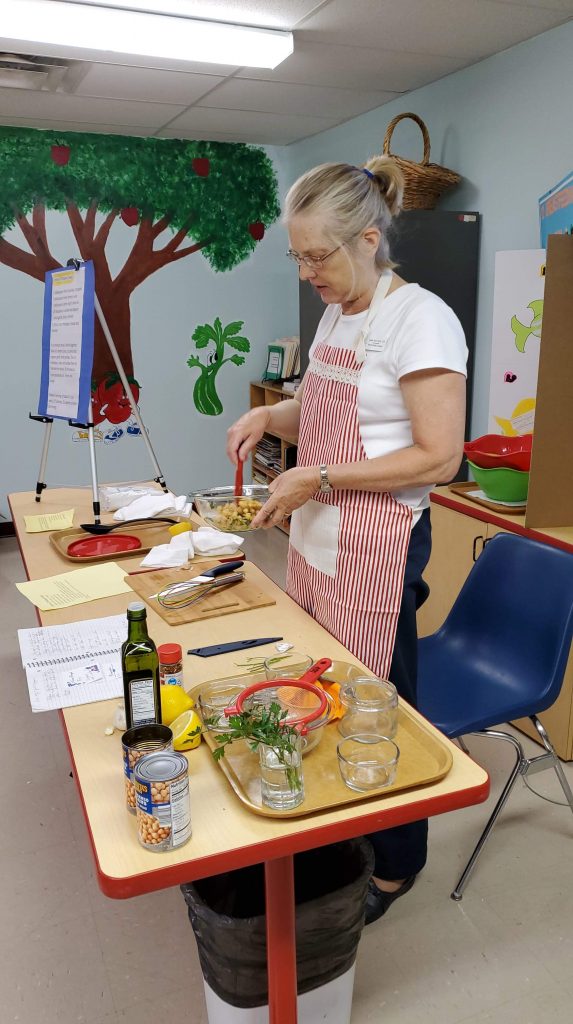
Making healthy choices at mealtime is not always easy, especially on a budget. The objective of a food demonstration is to improve and diversify family feeding practices. Live demonstrations help parents develop cooking skills and confidence to prepare nutritionally balanced meals at home. As nutrition educators, we know that families on a tight budget are less likely to try something new in the kitchen if they are required to spend money on unfamiliar foods and ingredients. Food demos are a great way to introduce new foods at no cost! Participants can see, smell and taste new recipes and discover firsthand that healthy foods can be delicious. Six in 10 adults who attend short, interactive sessions said they were willing to make a healthy change. https://community-nutrition-education.extension.org/wp-content/uploads/2019/03/2018-Illinois-SNAPed-Impacts_spread.pdf It is our responsibility as educators to help our clientele understand what healthy eating is.

At Well Child Center (WCC) we have partnered with Activate Elgin, Advocate Sherman Hospital and U-46 to help our community better understand the importance of a healthy diet.

As part of National Nutrition Month, Well Child Center has partnered with Activate Elgin to promote their campaign: March Into Health. The WIC program’s Food Demonstration: Edible Kitchen on Thursday, March 26th at 5:45 p.m. is open to the public to attend.  A seasonal soup and salad demo will be presented by Linda Rusenovich, RD, LDN and WIC Nutritionist for participants to sample. Adults and children in the community are welcomed to come! Please RSVP to this event with Karen at 847-930-6716 by March 20th to attend.

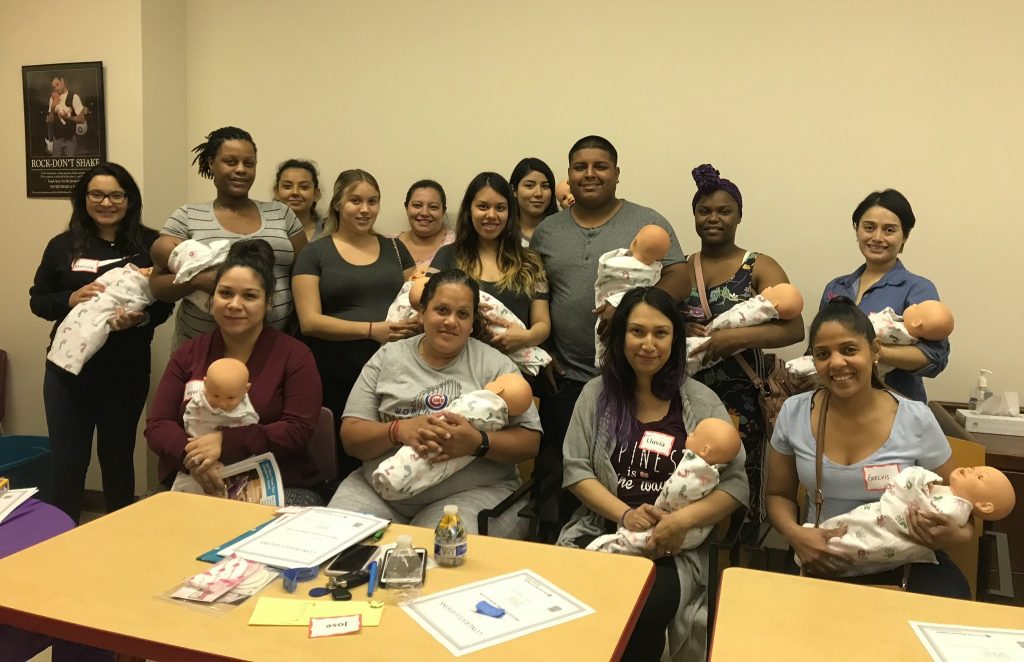
Since 2016, Well Child Center and Advocate Sherman Hospital have worked collaboratively to offer Childbirth Education Classes. These classes are taught in 4-week sessions by certified instructors every month. Expectant mothers are provided with instruction and support to help navigate pregnancy through the postpartum period. In the final week of class, the instructor provides a cooking demonstration featuring nutrition education specific to mom and baby.

We are overjoyed to partner with U-46’s Parents as Teachers (PAT) program. The PAT program is designed to help parents of children from birth to age 3 to feel more confident in their role as their child’s first teacher. WCC’s WIC program is dedicated to helping parents feed their children properly during critical periods of growth. To help parents feel more confident in the kitchen, we have opened our WIC program’s Food Demonstration: Edible Kitchen to PAT parents in April.

WCC has one primary goal – to create and maintain broad-based community partnerships to help all families and children thrive. This goal remains the core vision of our organization and we will continue to carry out our mission to Growth Healthy Families.

Filed Under: Events, Nutrition, Well Child Center

Free Childbirth Education Classes

January 14, 2020

Well Child Center has partnered with Advocate Sherman Hospital to offer Childbirth Education classes. These classes are taught in 4-week sessions by certified instructors every month. Expectant mothers are provided with instruction and support to help navigate pregnancy through the postpartum period.

The class schedule is as follows:

Tuesdays 5:45 p.m. to 7:45 p.m.

Week 1 – Labor & Delivery, Pre-Eclampsia, Diabetes and Pre-term Labor

Week 2 – Epidurals, Cesarean Section and Post-partum Depression

Week 3 – Breastfeeding: Latching, Positions and Practice

Week 4 – Newborn care: Diapering, Holding, Bathing and Nutrition

Normally you would pay $125 to take similar classes at the hospital, but our programmimg is free to WIC participants. Additionally, an infant car seat will be raffled at the end of each class series!

We are proud of our collaboration with Advocate Sherman Hospital to create an innovative curriculum to motive expecting mothers to breastfeed. The benefits of breastfeeding are abundant! Therefore, we are happy to share our knowledge and support mothers through their breastfeeding journey.

The class outcomes are undeniable for the 565 pregnant women who have attended:

  • 97% of mother attendees initiate breastfeeding at birth
  • 77% of mothers continue to breastfeed at 6 weeks
  • 64% of mothers continue to breastfeed at 12 weeks
  • 35% of mothers continue to breastfeed at 6 months
  • 26% of mothers continue to breastfeed at 12 months

If you or someone you know are interested in attending the Advocate Sherman Hospital and Well Child Center Childbirth Education classes, please call:

Well Child Center at (847) 741-7370 or

Chayo at (630) 391-0001

Filed Under: Breastfeeding, Child Development, Events, Nutrition, Well Child Center

Let Well Child Center Become Your Dental Home

December 18, 2019

Dental caries, also known as dental decay or cavities, is the most common chronic disease among young children. The Centers for Disease Control and Prevention reports that more than 40% of children have decay by the time they enter kindergarten. And sadly, majority of decay is left untreated! The good news is that cavities are preventable.

The foundation of optimal oral health begins in the first years of life. However, many parents of young children don’t see the importance of seeing the dentist early. All too often parents say, “my child is too young”, “he doesn’t have enough teeth yet”, or “cavities in baby teeth don’t matter, they’ll be lost anyways.” All these statements are not true.

It’s recommended that children begin seeing a dentist at 1 year old, despite having little or no teeth. The first visits are to help your child become accustomed to the dentist’s chair and educate parents on the importance of caring for baby teeth. It is essential to establish a proper oral hygiene routine early to ensure development of strong and healthy teeth. Good habits formed early and performed often will help prevent decay in later years. Therefore, toothbrushing twice per day should be presented as an everyday habit and as part of your child’s daily care.

Unique to Well Child Center (WCC) is our “First Tooth Visit” Program that targets children at their first birthday. During this visit, parents and caregivers are educated on the need for regular dental check-ups – even for primary teeth. WCC dentists conduct a thorough dental exam and parents are given specific instruction on how to care for emerging teeth. A dental care kit containing essential dental care tools are given to children so they may continue an oral hygiene routine at home between dental visits. Lastly, the next dental appointment is scheduled to maintain consistent care and to establish a dental home.

WCC focuses on education and relationship-building to help empower families to prevent disease and manage dental decay. The dental home is the ongoing relationship between the dentist and the patient, inclusive of all aspects of oral health care delivered in a comprehensive, continuously accessible, coordinated, and family-oriented way.

At WCC all children are welcome despite their parent’s insurance status and financial limitations. Call 847-930-9721 to schedule an appointment or to learn more. We’re always excepting new smiles!

About Melinda Scheibe

Melinda received a B.S. in Nutrition from Illinois State University. Upon graduation, she joined Well Child Center and is actively working as a WIC Nutritionist and Development Associate. Melinda is committed to her career as a Nonprofit professional, empowering families to reach their maximum potential.

Filed Under: Dental Health, Well Child Center

No App Can Replace Your Lap

November 12, 2019

Life is always so go-go-go, it can be hard to make time to sit down and read to your child. However, the benefits of reading are undeniable and well worth the time amid hectic routines. Reading every day to young children starting in infancy can facilitate early development. This is because reading to children in the earliest months stimulates the brain allowing a child to build key language, literacy and social skills.

Here are 7 factors to consider when reading to your little one:

1. Reading sets children up to succeed. The more you ready to your child, the more knowledge they will absorb. Diverse books teach children about different topics.

2. Reading develops language skills. Everyday vocabulary is often repetitive. Reading books exposes a child to language on different topics, meaning they hear words and phrases they may not hear otherwise.

3. Reading enhances a child’s concentration. By consistently reading every day, your child will learn to concentrate and sit still for longer periods of time.

4. Reading develops a child’s imagination. When we engage in a book, we imagine the characters and the setting sparking creativity.

5. Reading books helps develop empathy. Children will begin to identify with characters and feel what they are feeling, thus beginning to understand and relate to emotions.

6. Books are free entertainment! With so many negative aspects of screen time, choosing a book that interests your child is a better option.

7. Reading together helps create a bond between parent and child. Spending time together while reading and talking can bring parents closer to children. For parents who work or live a busy lifestyle, reading is a simple way to enjoy each other’s time while relaxing and bonding.

So instead of saying “honey, I don’t have time,” make the effort to sit down and read. There is no app to replace your lap!

About Melinda Scheibe

Melinda received a B.S. in Nutrition from Illinois State University. Upon graduation, she joined Well Child Center and is actively working as a WIC Nutritionist and Development Associate. Melinda is committed to her career as a Nonprofit professional, empowering families to reach their maximum potential.

Filed Under: Child Development, Well Child Center

A Parent’s Guide to Screen Time

October 2, 2019

If you’ve ever wondered whether it’s worth fighting with your child over the amount of time he or she spends in front of the TV, computer or another screen, the answer is a resounding YES. Research has shown that kids spend more time using electronic media devices than they do on any other activity – an average of 7 hours a day, according to the American Academy of Pediatrics. Screens are everywhere and as a result, having control over a child’s screen time has become much harder on parents. Although some screen time can be educational, too much of it may have a negative effect on a child’s development and overall well-being. As your child grows, keep in mind that too much or poor-quality screen time has been linked to:

  • Obesity
  • Irregular sleep schedules and shorter duration of sleep
  • Behavioral problems
  • Loss of social skills
  • Violence
  • Less time for play

Monitoring screen time and media content is an absolute necessity. Although limiting screen time will not immediately lead to changes, over time there is a wide range of health and wellness benefits associated with less exposure.

Here are a few tips to help regulate screen time:

  • Children under the age of 2 should have zero screen time
  • Reduce screen time to only 2 hours a day
  • Create a “screen free” zone in the home
  • Remove screens from a child’s bedroom
  • Do not leave the TV on as background noise
  • Be a good role model

Experts also suggest that the quality of the screen content your child is viewing is more important than the platform or amount of time spent. Not all programs, online games and apps are created equal. To ensure quality screen time, consider these tips:

  • Preview programs, games and apps before allowing your child to play them
  • Seek out interactive options that include activity vs. sedentary entertainment
  • Use parental controls to block or filter internet content
  • Ensure your child is close by during screen time so that you can supervise media activities
  • Speak with your child regularly about what programs, games and apps he or she is using
  • When watching programming with your child, discuss what you’re watching and educate him or her about media content/advertising

Reserving more time for person-to-person interaction and offering activities that encourage creativity and socialization will limit screen time and promote a child’s healthy development. Remember: unstructured playtime is more valuable for a young child’s developing brain than an electronic device!

About Melinda Scheibe

Melinda received a B.S. in Nutrition from Illinois State University. Upon graduation, she joined Well Child Center and is actively working as a WIC Nutritionist and Development Associate. Melinda is committed to her career as a Nonprofit professional, empowering families to reach their maximum potential.

Filed Under: Child Development, Well Child Center

  • « Go to Previous Page
  • Page 1
  • Page 2
  • Page 3
  • Page 4
  • Page 5
  • Page 6
  • Go to Next Page »

Primary Sidebar

Recent Posts

  • Join Us at the Elgin Sing-Along Messiah, December 4, 2025!
  • Raising Awareness of Urgent Maternal Warning Signs in Kane County
  • Brighter Smiles, Brighter Community Initiative
  • Fatherhood and Male Family Member Engagement Initiative
  • Dental Care for School Age Children—It’s More than Just Brushing

Archives

  • September 2025
  • July 2025
  • May 2025
  • November 2023
  • March 2023
  • January 2023
  • October 2022
  • September 2022
  • August 2021
  • June 2021
  • May 2021
  • March 2021
  • August 2020
  • June 2020
  • March 2020
  • January 2020
  • December 2019
  • November 2019
  • October 2019
  • September 2019
  • August 2019
  • June 2019
  • May 2019
  • April 2019
  • March 2019
  • January 2019

Categories

  • Breastfeeding
  • Child Development
  • Dental Health
  • Events
  • Food for Families
  • Nutrition
  • Well Child Center

Footer

Well Child Center

620 Wing Street, Suite 2
Elgin, Illinois 60123

Phone: 847-741-7370
FAX: 847-741-2413

  • Facebook
  • Instagram
  • Twitter

Quick Links

  • Schedule a Visit
  • Dental Services
  • WIC Nutrition Services
  • Partnerships / Resources
  • Well Child Center Blog
  • Privacy Policies
  • Donate!

Support Well Child Center!

We accept donations through PayPal

DONATE TODAY

Serving Northern Kane County

  • ¡Se Habla Español!

Copyright © 2025 · Well Child Center | Elgin · Carpentersville | Website by Wolko Design Group, inc.